
What Buyers Moving to the South Okanagan Get Wrong About the Home Search
Most buyers arrive in the South Okanagan with a spreadsheet. Beds, baths, square footage, price ceiling. Those inputs produce a search — but they don't produce a decision framework. And in a region where Penticton, Oliver, Osoyoos, and Summerland each attract a genuinely different kind of buyer, and where the gap between the right community and the wrong one can play out daily for years, spec-first searching tends to create problems that show up after possession, not before.
The buyers who land well in the South Okanagan — who are still happy with the decision three years in — are the ones who led with lifestyle questions first. Not as a soft exercise, but as the actual filter that narrows the search. Price, property type, and specs come after.
This is a practical guide to what that looks like: the community differences that matter, the distance variables most buyers underestimate, the seasonal realities worth knowing before you buy, and how to build a search that reflects how you actually intend to live here.
- The South Okanagan Isn't One Market — It Has Several Different Characters
- Your Lifestyle Criteria Are the Real Search Filters
- Distance in the Valley Isn't Abstract — It's Daily
- Property Type and Pace of Life Are the Same Decision
- The Seasonal Reality Most Relocators Don't Expect
- How to Build a Lifestyle Brief Before You Start Searching
- What This Changes About Working With a REALTOR®
At a Glance
- Most buyers over-filter on specs and under-filter on lifestyle fit — the mismatch shows up after possession.
- Penticton, Oliver, Osoyoos, and Summerland attract genuinely different buyers. Choosing between them is a lifestyle decision.
- The distance between communities plays out daily. Model it against your actual schedule before you commit.
- Property type is a lifestyle vote, not just a budget constraint — strata and acreage suit very different people.
- The South Okanagan's shoulder seasons are part of what you're buying. Visiting in October before you decide is worth the trip.
- A lifestyle brief — built before you start searching — is more useful than a spec sheet.
The South Okanagan Isn't One Market — It Has Several Different Characters
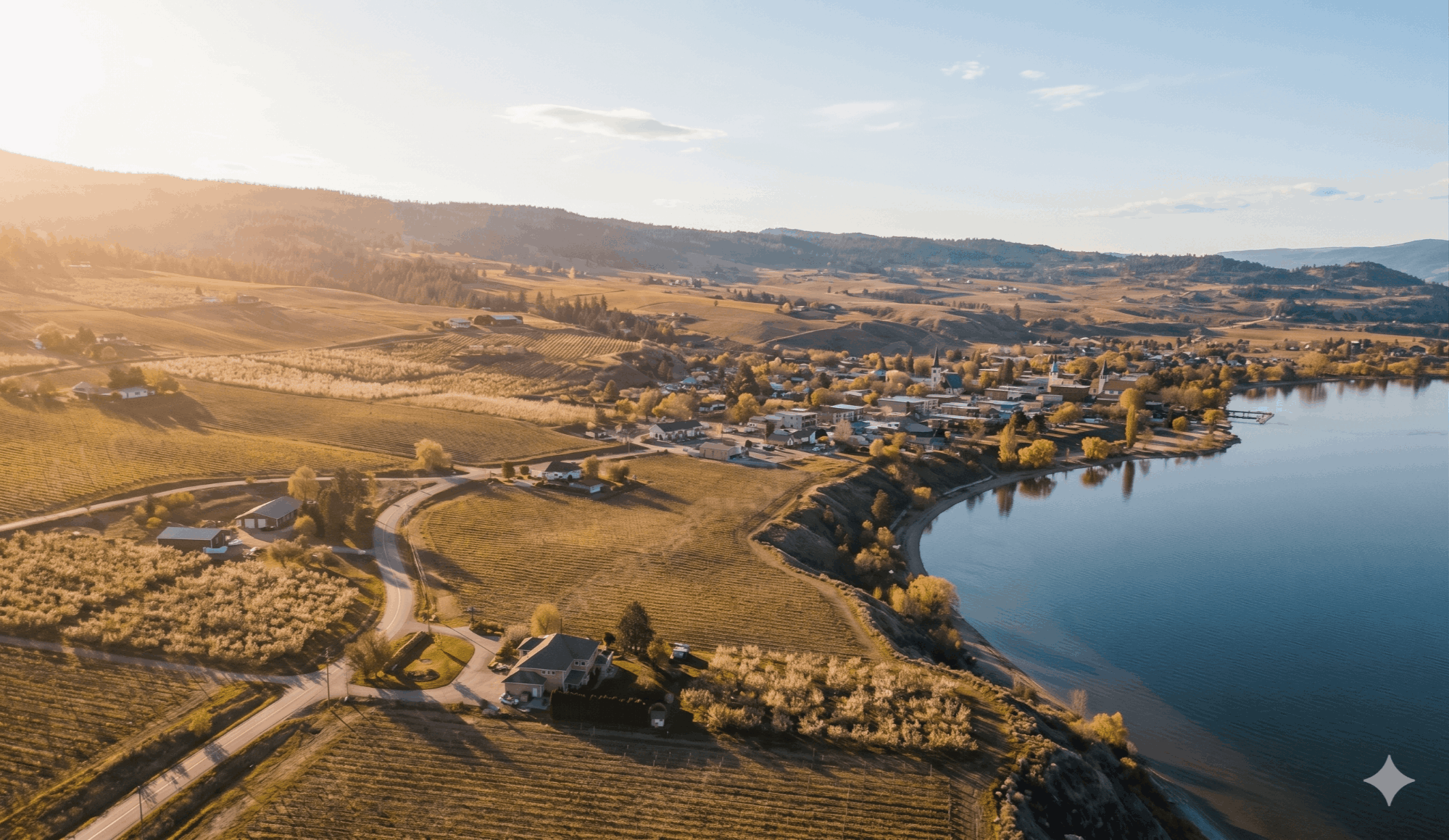
The mistake is treating "South Okanagan" as a search filter the same way you'd use "East Vancouver" or "NW Calgary" — a geographic shorthand that points you at a coherent pool of inventory. It isn't. The corridor from Penticton to Osoyoos is about 95 kilometres of valley, and the communities along it have genuinely distinct characters. Understanding the differences before you start searching is the difference between ending up in the right place and ending up in a technically sound purchase that doesn't fit.
| Community | Character | Best Fit Buyer | Key Tradeoff |
|---|---|---|---|
| Penticton | Service hub, two lakes, year-round population ~35,000 | Retirees, families, remote workers, investors | Higher price per sq ft than anywhere south |
| Oliver | Agricultural, wine country, flat valley floor | Buyers wanting land per dollar, slower pace, vineyard proximity | Thinner service infrastructure |
| Osoyoos | Canada's warmest lake, resort economy, US border | Retirees, vacation property buyers, leisure-forward lifestyle | Seasonal ebb and flow; off-peak quiet |
| Summerland | Established, smaller, strong local identity | Buyers wanting acreage near Penticton at lower prices | Less urban scene of any kind |
| Keremeos / Hedley | Rural, remote, substantially cheaper | Buyers genuinely seeking rural isolation | Real daily conversation about access to services |
The point isn't that any of these communities is better than the others. It's that they suit different people for different reasons — and picking between them is not a search problem, it's a clarity problem. Get clear on which community actually fits your life, and the search becomes fast and precise. Skip that step, and you're browsing photos.
Your Lifestyle Criteria Are the Real Search Filters
Before you can search effectively in the South Okanagan, there are questions to answer that don't appear on any MLS® listing — and that no search portal will prompt you to consider.
What does a normal Tuesday look like from that address? Are you walking to a coffee shop, or driving 20 minutes to reach the nearest town centre? Are you on a bike path within two blocks, or loading the truck to get to the trailhead? Are you grabbing groceries at 7pm, or planning ahead because the closest store closes at 6? These aren't dramatic questions, but the answers determine whether the daily reality of a purchase works for you.
What's the actual relationship with the lake? Some buyers want to be on the water — dock access, direct swimming, that specific quality of morning when the lake is flat and close. Others want to be near the lake in the scenic sense, without paying a water-access premium or dealing with the foot traffic that comes with it in July. The price difference between those two positions is significant. So is the experience of living it daily.
What level of community density is right for you? Penticton has events, restaurants, a downtown corridor, and a social calendar. Oliver and Osoyoos wind down earlier and have less of it year-round. Buyers who arrive from Metro Vancouver expecting something resembling an urban social scene can be genuinely surprised by the pace — not unhappily, necessarily, but it's an adjustment worth understanding in advance rather than after you've committed.
What's the remote work situation? Connectivity in the valley has improved substantially, but it's not uniform. Urban cores in Penticton, Oliver, and Osoyoos are fine. Rural acreage lots in elevated areas above Summerland or south of Oliver can still be inconsistent. If remote work is a firm requirement, this needs to be on the due diligence list — a quick check before an offer, not a discovery after possession.
How close to medical services do you need to be? Penticton Regional Hospital is the primary facility for the region. If medical proximity is relevant — for yourself, or for aging parents who may relocate eventually — that places a meaningful weight on Penticton or at most Summerland. Living in Osoyoos with a time-sensitive medical condition is a different calculation than visiting for the summer.
None of these are soft questions. They are the actual decision criteria. Price per square foot matters — but so does what you're actually buying into when the spreadsheet is put away.
Distance in the Valley Isn't Abstract — It's Daily
On a map, Penticton to Oliver is about 40 minutes. Penticton to Osoyoos is roughly 60. Those numbers are accurate and they sound manageable — until you model them against your actual schedule.
If your kids' activities are in Penticton and you're living in Osoyoos, that's a minimum of two hours of driving per event. If your specialist is in Kelowna and you're based in Oliver, you're looking at 90 minutes each way. If you work in Penticton and love the wine country pace of Oliver, that's a potential 80 minutes of daily driving. None of these scenarios are disqualifying — many buyers make exactly these calculations and decide the tradeoffs are worth it. But they make that decision consciously, with clear eyes about what it means on a Wednesday in February, not based on how it felt on a warm Saturday drive in August.
There's also a geography factor that doesn't show up in drive-time calculators. The valley runs north-south through a mountain corridor, and the connector highways — primarily 3 and 97 — can close in winter weather. Buyers with regular travel to the coast, or family obligations that involve the Coquihalla, need to factor in that their primary route can be disrupted by conditions that are genuinely common in winter, not just unusual.
"The buyers who call me six months after possession with regrets are almost never unhappy with the house itself. They're unhappy with the distance. It looked manageable on paper. It didn't feel that way once it was daily life."
Distance in the South Okanagan is a feature of daily life, not just a geographic fact. It deserves to be modelled against your actual schedule before it becomes someone else's problem.
Property Type and Pace of Life Are the Same Decision
In most markets, property type is primarily a budget decision: a $400,000 ceiling gets you a condo, $700,000 gets you a townhome, $1.1M gets you a detached house. That framework works when you're buying in a market where lifestyle variations between property types are modest.
In the South Okanagan, property type is also a lifestyle vote — and buyers who ignore that connection end up with purchases that are technically sound and practically uncomfortable.
Strata townhomes in Penticton, Oliver, or Osoyoos come with a specific set of conditions: no oversized vehicles, no boats in the driveway, limits on rentals, shared common areas, strata fees, and rules that vary significantly by complex. For a buyer downsizing from a full house who wants low-maintenance living and to hand off exterior upkeep — those are features. For a buyer arriving from rural Alberta who is accustomed to parking a trailer, a quad, and a work truck on their own property — those same conditions become friction within months.
Acreage south of Oliver, in the hills above Summerland, or along the rural corridors near Keremeos delivers space, privacy, and land. It also delivers well maintenance, septic systems, longer driveways in winter, distance from services that requires planning rather than assumption, and in some areas, limited cell coverage. For the right buyer — someone specifically seeking privacy, quiet, and land — this is exactly the point. For a buyer who has overestimated how much they want to trade urban convenience for rural space, the mismatch becomes apparent by the first hard winter.
The right question is not "what can I afford?" first. It's "what kind of property actually fits how I live day-to-day?" — and then you find the best value within that category. In this region, those two questions often point in the same direction, but they're not the same question.
The Seasonal Reality Most Relocators Don't Expect
The South Okanagan sells itself in July and August, and it earns that reputation. Warm lake temperatures, full-sun days, wine trail cycling, farmers' markets, hiking in conditions that rival anywhere in Canada. If you visit in summer and fall in love with the valley, the experience is real — it isn't a marketing version of something smaller.
But summer is one quarter of what you're buying. The shoulder seasons are the rest, and they are genuinely different.
October through April in Oliver and Osoyoos is quiet in a way that catches people off guard. Restaurants cycle their hours or close entirely for portions of winter. Seasonal services scale back. The population that inflates in summer contracts substantially. This is not unpleasant — the valley has a particular quality in early spring and in October that some residents prefer to the congestion of peak season — but it is a different reality than the one that drove the purchase decision for most out-of-province buyers.
Penticton is less pronounced in this regard. Larger year-round population, more year-round commercial activity, a downtown that maintains more consistent energy across seasons. But even Penticton in February is a meaningfully different town than Penticton in August.
The practical implication: if you're making a relocation decision based on a summer visit, add an October or November trip before you commit. One visit in the off-season is worth more than three visits in peak season for understanding what your actual daily life here looks like for the majority of the year. Buyers who do this are never surprised. Buyers who don't occasionally are.
How to Build a Lifestyle Brief Before You Start Searching
A lifestyle brief is not a wishlist and it's not a mood board. It's a prioritized set of concrete answers to the questions that actually determine whether a purchase works — not just at possession, but three years later.
At minimum, it should answer:
Where in the valley, and why. Not just which town, but what daily life looks like from a specific address. Do you know what you'll be doing at 7am on a weekday six months after you move in? Who are you near? What are you close to and far from?
What property type actually fits the life you're building here. Not the life you had in another city. Not an idealized version of Okanagan living that requires lifestyle changes you haven't made yet. The property type that fits your actual daily rhythm and the pace you're honestly looking for.
What access matters and what you're willing to trade. Medical proximity, highway access, distance from services, proximity to family. What's non-negotiable and what's genuinely flexible.
How you use the property in all four seasons. Summer planning is easy. Winter planning is the test. If your mental image of life in this property is entirely summer-based, the brief is incomplete.
What community density is right. Some buyers need the sense of a town around them — restaurants, events, people. Others are specifically leaving that behind. Knowing which you are prevents the most common form of South Okanagan buyer regret, which is ending up in the right property in the wrong community.
With clear answers to these questions, a search narrows dramatically and moves quickly. Without them, you're scrolling listings and reacting to photos — which works eventually, but typically after more time and more compromises than necessary.
What This Changes About Working With a REALTOR®
A lifestyle-led search requires a different kind of opening conversation. Instead of "show me everything under $750K with three beds," it starts with "here's what I'm trying to build, and I want your honest read on which part of the valley makes sense for it."
That conversation surfaces things that don't exist in listing data: which strata complexes have upcoming assessments that change the real cost of ownership, which areas have active development pressure that alters what the surrounding land looks like in five years, which streets feel different from their listing photos, where the quiet neighbourhoods actually are versus where they're assumed to be, and which properties would suit you based on how you live rather than the category they fall into.
I've been in the South Okanagan long enough to run these conversations practically. I know which communities suit which buyers, and I know which assumptions people arriving from Metro Vancouver, Calgary, or the Interior commonly make that don't survive first contact with how this valley actually operates. If you're early in the process — still deciding whether this is the right move, still figuring out which community — that's the right time to talk, not after you've already narrowed to a shortlist. The first conversation shapes everything that comes after, and it's worth doing before you've committed to a direction you might not actually want.
Frequently Asked Questions: Buying in the South Okanagan
Is the South Okanagan a good place to retire?
For the right buyer, it's one of the strongest regions in Canada for retirement. The climate, pace of life, land value, and quality-of-life indicators all work in a retiree's favour. The key is matching the specific community to how you actually want to live: services proximity, density preference, how active you want to be, and whether low-maintenance strata living or land and space is right for your next stage. Those decisions shape the long-term fit far more than price per square foot does.
What's the difference between buying in Penticton vs. Oliver vs. Osoyoos?
Penticton is the service hub — hospital, full retail, two lakes, a year-round population of around 35,000. Oliver is quieter, agricultural, wine country, and offers more land per dollar. Osoyoos is Canada's warmest community, more resort-oriented, with a strong retiree and vacation property demographic. Each community has a genuinely different character, and choosing between them is a lifestyle decision — not a budget exercise.
Is internet connectivity good enough for remote work in the South Okanagan?
In most of Penticton, Oliver, Osoyoos, and Summerland, broadband is solid and adequate for remote work. Gaps appear in rural acreage properties — parts of the hills above Summerland and more remote lots — where coverage can still be uneven. If remote work is a firm requirement, confirm the specific address's connectivity before submitting an offer. It's a quick check and worth doing early in the process.
What is it like to live in the South Okanagan in winter?
Mild by Canadian standards — Osoyoos and Oliver rarely see significant snow accumulation, and winters across the valley are manageable compared to most of BC or the Prairies. What changes is pace: some seasonal businesses reduce hours or close, the population contracts, and the energy of summer is absent. This is a feature for buyers who want quiet. For buyers from larger cities expecting year-round urban amenities, it's a genuine adjustment. One visit in October or November before you commit is worth more than three visits in July.
How do I figure out which South Okanagan community is right for me?
Answer the questions that don't appear on any listing: What does a normal weekday look like from that address? How important is proximity to services and medical care? What's your relationship with the lake? Do you want density and walkability, or space and quiet? How do you use the property in winter, not just summer? Clear answers narrow the community choice far faster than browsing listings does — and that's exactly the kind of conversation I have with buyers before they start searching.
Do I need a local REALTOR® if I'm relocating from another province?
Yes — and the further you are from the region, the more it matters. A local agent knows which strata complexes have upcoming assessments, which areas have active development pressure, which neighbourhoods feel different from their listing photos, and which properties actually suit you based on how you live. That context doesn't exist in listing data. It influences the quality of your decision in ways that matter long after possession.
What should I know about strata rules before buying in the South Okanagan?
Strata bylaws vary significantly between complexes. Common restrictions include limits on rentals, no oversized vehicles or boats in parking areas, pet restrictions, and rental caps. Always review the strata minutes and bylaws before submitting an offer — upcoming special assessments in particular can change the true cost of ownership significantly. This is due diligence that takes less than an hour and can save a lot of surprises after possession.
What's the best time of year to visit the South Okanagan before buying?
Come in summer to experience the peak — that experience is real and worth seeing firsthand. But also come in October or November before you commit. One off-season visit will tell you more about your actual daily life in that community than three summer visits will. The shoulder-season reality is the one you'll be living most of the year, and buyers who visit in both seasons are rarely surprised by what they find after possession.
Not Sure Where to Start?
If you're thinking through a South Okanagan purchase and want to work through what you're actually looking for before you start searching, let's have that conversation. No pressure. Just a clear starting point.
Sources
- Statistics Canada — Census Profile 2021, City of Penticton (population and demographic data)
- BC Ministry of Transportation and Infrastructure — Highway 3 and Highway 97 corridor information
- Penticton Regional Hospital — interiorhealth.ca (regional hospital service area)
- Association of Interior REALTORS® (AIR) — South Okanagan MLS® market data
- Environment and Climate Change Canada — climate.weather.gc.ca (Osoyoos and Penticton sunshine and precipitation normals)

This article is for informational purposes only and should not be considered financial or legal advice. Always consult with a qualified mortgage professional and licensed REALTOR® for the most current information.
Categories
- All Blogs (76)
- Buyer Guidance (3)
- Buyer Guides (2)
- Buyer Resources (1)
- Buying Tips (3)
- Canadian Real estate Trends (3)
- Construction & Material Costs (2)
- Contracts & Consumer Protection (1)
- Downsizing (1)
- Economic Insights (2)
- Estate Planning & Finance (1)
- Featured Listings (2)
- Financial Education (1)
- Financial Planning for Homebuyers (2)
- First time Buyer Advice (4)
- Home buying advice (7)
- Home Buying Guides (3)
- Home Selling Strategies & Market Insights (1)
- Home Selling Tips & Market Insights (1)
- Homeowner Advice (3)
- Homeownership Tips (1)
- Housing Market Analysis (1)
- Interest Rates & Financing (1)
- Investment & Lifestyle Real Estate (1)
- Investment Strategies (2)
- Legal & Probate Guidance (1)
- Listings in Oliver (1)
- Market Trends (1)
- Market Education (1)
- Market Updates (15)
- Mortage & Financing (2)
- Mortage Strategies (2)
- Okanagan Lifestyle & Local Guides (2)
- Osoyoos Real Estate (3)
- Penticton & Okanagan Housing Market Analysis (1)
- Penticton Real Estate (4)
- Pet-Friendly Homes (1)
- Probate & Estate Real Estate (1)
- Probate Real Estate (1)
- Real Estate Business & Motivation (1)
- Real Estate Career & Client Education (1)
- Real Estate Career & Motivation (2)
- Real Estate Career Insights (1)
- Real Estate Education (1)
- Real Estate Financing & Investment (1)
- Real Estate Guides (3)
- Real Estate Insights & Guides (3)
- Real Estate Investment & Market Insights (1)
- Real Estate Investment Analysis (1)
- Real Estate Investment Strategies (1)
- Real estate Market insights (1)
- Real Estate Market Updates (1)
- Real Estate Tips (5)
- Real Estate Trends (1)
- Remember to Create (1)
- Seller Guides (1)
- Seller Resources (1)
- Seller Tips (1)
- Selling Tips (2)
- South Okanagan Insights (1)
- South Okanagan Listings (1)
- South Okanagan Market Reports (2)
- South Okanagan Market Update (4)
- South Okanagan Real estate (11)
- South Okanagan Real Estate Investing (3)
- South Okanagan Real Estate Market (2)
- Sustainable Real Estate Investing (1)
- Townhouse Oliver (1)
Recent Posts